
You Don’t Have a “Performance Problem.” You Have an Execution Bottleneck.
Why most teams slow down, and how to identify the real constraint.

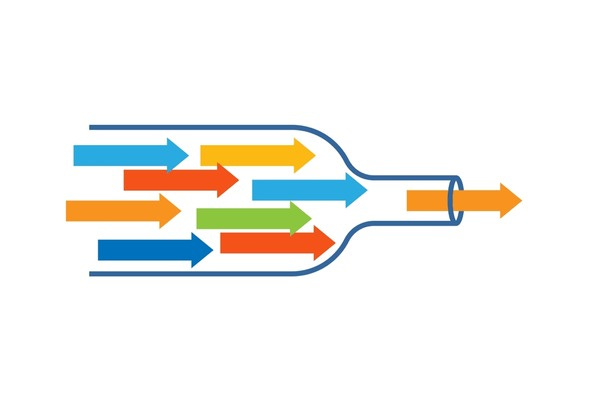
Most leaders think their team is underperforming because of effort, attitude, or talent.
And sure, sometimes that’s true.
But in the organizations I’ve worked in throughout my career, the real issue is almost always simpler and more uncomfortable:
Your team is trying hard… inside a system that makes execution harder than it needs to be.
That’s not a motivation problem.
That’s an operating system problem.
And the fastest way to diagnose it is to stop asking, “Why aren’t we moving faster?” and start asking:
Where is work getting stuck?
The Hidden Lie: “We Just Need to Work Harder”
When output slows down, leaders often respond with pressure:
More meetings
More check-ins
More status reporting
More urgency
More “accountability”
All of that sounds productive.
Most of it increases drag.
Because if your system is constrained, pushing harder doesn’t create more throughput, it creates more stress, more rework, and more noise.
The team isn’t failing.
The flow is failing.
Execution Bottlenecks: What They Actually Look Like
A bottleneck is simply the point in your system that limits throughput.
In teams, bottlenecks rarely look like a single broken process chart.
They look like patterns:
1) Everything escalates to the same person
If decisions routinely climb to one leader, that leader becomes the throughput limit.
Even if they’re fast.
Even if they’re smart.
A system that depends on escalation is a system designed to stall.
2) “Waiting” becomes normal
Work waits for:
approvals
context
clarifications
inputs
sign-offs
rework
Most teams don’t track waiting. They just live inside it.
3) Meetings become the operating system
If the only way work moves is by talking about it in a meeting, your system has no structure outside of conversation.
That’s fragile. And it doesn’t scale.
4) Quality issues keep reappearing
When the same issues show up repeatedly, you don’t have a people problem, you have a clarity/hand-off/process problem.
Rework is a tax. It compounds.
The Three Root Causes I See Over and Over
Most execution bottlenecks trace back to one (or more) of these:
1) Capacity
This is the simplest one. Not enough time. Too much work.
But capacity is often a symptom, not the root cause. Poor structure creates artificial capacity problems.
2) Clarity
This shows up as:
unclear ownership
unclear priorities
unclear “definition of done”
unclear decision rights
When clarity is missing, people do one of two things:
stall and ask for permission
or move forward and create rework
Both kill speed.
3) Structure
Structure is how your team actually operates:
how decisions get made
how information flows
how priorities are set
how work gets handed off
how accountability is created
A lot of teams don’t have structure.
They have habits.
And habits don’t scale.
The Operator Question That Changes Everything
Here’s the question I use most often when diagnosing execution drag:
If you removed one person for two weeks, what would stop moving?
That answer reveals dependencies you’ve normalized.
And once you see those dependencies, you can redesign them.
Not with more pressure.
With better architecture.
What High-Performing Teams Do Differently
High-performing teams aren’t “more motivated.”
They have clearer operating systems.
They tend to:
define who owns what
define how decisions are made
define how work moves
reduce escalation
minimize rework
protect focus time
keep meetings purposeful and minimal
In other words:
They protect flow.
A Simple Starting Point You Can Use This Week
If you want to start acting like an operator, not a firefighter, do this:
Ask your team:
Where do we lose the most time each week?
Where does work consistently get stuck?
What do you wait on most often?
What decisions feel unclear or slow?
What do you redo more than once?
Then look for a pattern.
Most teams can identify their primary bottleneck in one conversation.
The hard part isn’t seeing it.
The hard part is redesigning the system so it stops reappearing.
Why I’m Writing About This
I’m writing because most leadership content talks about mindset and motivation.
But operators know: execution improves when the system improves.
If you’re leading a team and you feel like you’re stuck in reactive mode, constant escalation, constant firefighting, constant meetings,
you’re not alone.
And you’re not failing.
You may simply be trying to scale without a clear operating system.
Over the next few months, I’ll be sharing more frameworks and tools around diagnosing and eliminating execution bottlenecks.
If this is your world, subscribe and stick around.